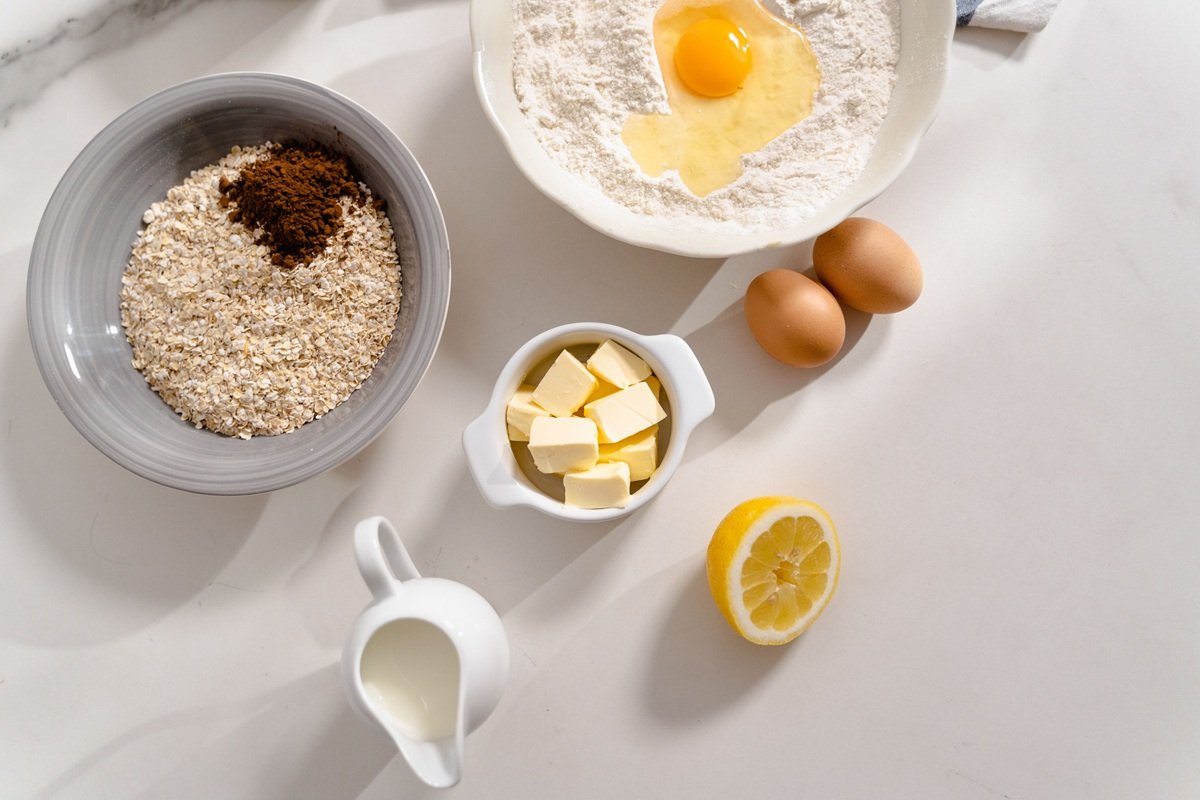
Ingredient Substitutions: 40+ Essential Swaps That Work
This ingredient substitutions guide is for two kinds of people in this world: the ones who realize they are out of butter before they start baking, and the ones who discover it after the sugar is already in the bowl.
If you have ever stood in your kitchen mid-recipe thinking, “Absolutely not, I am not going to the store for one cup of buttermilk,” this guide is for you.
Because sometimes ingredient substitutions are no big deal. The recipe turns out fine, nobody knows the difference, and dinner lives to see another day. And sometimes a swap is the exact moment a recipe goes from “homemade and delicious” to “well… that was a learning experience.”
That is the difference this guide is here to help with.
Not every swap works the same way. Some substitutions are great for moisture. Some help with structure. Some are perfectly fine in pancakes and muffins but fall apart in cakes, custards, or whipped toppings. A few sound good on paper but will absolutely change the texture, flavor, or rise if you use them without adjusting anything else.
So before you toss a recipe or make a panic run to the store, start here. And if you want the fastest route to a working swap, head straight to the Ingredient Substitution Converter on PantryConvert. It is built for those “what can I use instead?” kitchen moments when you need an answer fast.
Need to adjust more than one thing at once? PantryConvert also has tools for kitchen measurements, recipe scaling, grams-to-cups conversions, and baking conversions, because sometimes the missing ingredient is only one piece of the kitchen math.
Dairy Substitutions
Dairy is one of the most common places people get stuck, because butter, milk, cream, and buttermilk all do very different jobs in a recipe. Some add richness. Some add moisture. Some bring acidity. Some help with tenderness. So when you swap them, you want to think about what that ingredient is doing, not just what it is.
Butter Substitutions
Butter brings richness, flavor, and structure. In cakes and cookies, it can also play a big role in how the texture turns out. That means your best substitute depends on whether the butter is melted, softened, or being creamed with sugar.
If your recipe uses melted butter, oil is usually the easiest swap. A good rule of thumb is to use about 3/4 cup oil for every 1 cup butter. Coconut oil can often be used 1:1. This works especially well in muffins, quick breads, snack cakes, and brownies. The trade-off is flavor and texture: oil keeps baked goods moist, but you lose some of butter’s richness, and you cannot cream oil with sugar the way you can softened butter.
If you are baking something soft and forgiving, applesauce can also step in for butter. A common starting point is 1:1, though it is smart to watch the batter and use a little judgment if it starts looking too loose. Applesauce usually works best in muffins, snack cakes, spice cakes, and quick breads. It adds moisture, but it can make baked goods softer, denser, and a little less rich.
Greek yogurt is another solid stand-in, especially when you want moisture with a little tang. It can often be used 1:1 in recipes using less than 1 cup of butter. In larger amounts, it may help to reduce some liquid or add a bit more flour so the final texture does not turn too wet or heavy. This tends to work best in loaf cakes, muffins, and quick breads — not recipes where butter is the whole personality.
My practical kitchen take: use oil when you want an easy, dependable swap. Use applesauce when moisture matters more than richness. Use Greek yogurt when you want tenderness and do not mind a slight tang. If the recipe depends on creaming butter and sugar for lift, tread more carefully. That is not the place for random kitchen improvisation.
And yes, this is one of those moments where the Ingredient Substitution Calculator can save you from standing in the kitchen doing ratio math with a wooden spoon in your hand.
Buttermilk Substitutions
Buttermilk is one of those ingredients people rarely have until the exact minute they need it.
The classic quick fix is 1 cup milk plus 1 tablespoon lemon juice or vinegar. Let it sit for a few minutes, and you have a solid buttermilk substitute for pancakes, biscuits, quick breads, and cakes.
If you have plain yogurt or Greek yogurt, those can work beautifully too. Plain yogurt can be used 1:1 for buttermilk in many baking recipes. Greek yogurt usually works best when thinned with milk until it becomes pourable and behaves more like real buttermilk.
What changes? Usually not much if you are using the swap in muffins, pancakes, biscuits, or quick breads. The acidity is still there, which matters because buttermilk often works alongside baking soda. The texture may be slightly thicker if you use yogurt-based swaps, but in most everyday baking, that is not a deal-breaker.
Heavy Cream Substitutions
Heavy cream is rich for a reason: it has the fat content to bring body, silkiness, and sometimes whip. So the right substitute depends on whether the recipe needs cream for cooking, baking, or whipping.
For baking and cooking, one of the most common substitutes is milk plus butter. A useful kitchen ratio is 3/4 cup milk plus 1/4 cup melted butter for every 1 cup heavy cream. This works in sauces, soups, casseroles, and many baked recipes where the cream is there for richness, not for whipping.
If you have coconut cream, that can also work well in many recipes, especially soups, curries, and some desserts. Just know it brings its own flavor, and it is not pretending otherwise.
The important note here: a milk-and-butter mixture is helpful, but it is not a true whipped cream substitute. If the recipe needs stiff peaks, pipeable whipped topping, or something airy and stable, this is not the time to get too creative.
Milk Substitutions
If you are out of regular milk, you usually have more room to work than you think. Oat milk and almond milk can often be used 1:1 in many baked goods, especially muffins, pancakes, quick breads, and snack cakes. The thicker and more neutral the nondairy milk, the better.
Oat milk tends to be one of the easiest swaps because it is mild and behaves well in baking. Almond milk also works, though it can be slightly thinner depending on the brand. Evaporated milk is another useful pantry backup because it brings a little more richness than standard milk, especially in baked dishes, custardy bakes, and creamy sauces.
My rule here is simple: if milk is not the star ingredient, a 1:1 swap usually gets you where you need to go. If it is the star — like in homemade pudding, ice cream base, or a very creamy sauce — that is when the details matter more.
 Egg Substitutions
Eggs are where ingredient substitutions get a little more strategic, because eggs do more than one job. They can bind, add moisture, help with lift, add richness, and support structure all at once. That is why there is no single magic egg replacement for every recipe.
If the egg is mostly there to hold things together, flax egg and chia egg are both solid choices. These work especially well in cookies, muffins, pancakes, quick breads, and hearty batters where a little texture change will not ruin the recipe. Mashed banana can also help with binding, but it brings moisture and flavor too. So yes, it can work — but your banana bread will love it more than your vanilla cupcake will.
If the egg’s main job is tenderness and moisture, applesauce and plain yogurt are both good options. A common starting point is 1/4 cup per egg. Yogurt tends to keep things tender and moist. Applesauce does the same, but can make the texture softer and more cake-like.
When you need lift, aquafaba (liquid from unsalted chickpeas) is one of the more reliable options because it can mimic some of what egg whites do. It performs surprisingly well in simple baking without adding much flavor or color.
That said, there are limits. If a recipe is built around eggs — think souffles, custard pies, angel food cake, sponge cake, chiffon cake, or anything that relies on whipped eggs for structure — substitutions get much less dependable. In those cases, the better move is usually to find a recipe that was designed to be egg-free from the start.
So the big picture with eggs is this: flax or chia for binding, applesauce or yogurt for moisture, aquafaba when lift matters most, and if the whole recipe is basically an egg in a costume, do not force it.
Flour Substitutions
Flour swaps can work beautifully — or quietly sabotage your texture if you pretend all flours behave the same. They do not.
All-Purpose Flour Swaps
If you are out of all-purpose flour, the first question is what you are making. Bread flour is stronger and higher in protein, which means it builds more gluten. It can work in a pinch, but the final result may be chewier or sturdier than intended. That can be great for some breads and less ideal for tender cakes and soft muffins.
Cake flour moves in the opposite direction: softer, lower protein, more tender texture. It is lovely for cakes and less useful in breads or recipes that need more structure.
Self-Rising Flour Hack
This is one of the most helpful flour swaps to keep in your back pocket. If a recipe calls for self-rising flour and you only have all-purpose, make your own with 1 cup all-purpose flour, 1 1/2 teaspoons baking powder, and 1/4 teaspoon salt. That can be used 1:1 in recipes calling for self-rising flour.
If you are going in the other direction — using self-rising flour instead of all-purpose — it works best in recipes that already use a modest amount of baking powder. You will also want to omit the added baking powder and salt from the recipe because self-rising flour already has them built in.
Gluten-Free Swaps
Gluten-free flour blends can work, but this is one area where ratios alone do not tell the whole story. A cup-for-cup gluten-free blend is usually the safest bet for general baking, but results depend heavily on the blend, the starches used, and whether the recipe relies on gluten for structure.
Gluten-free baking is one of those places where the recipe matters more than the swap chart. My honest advice here is not glamorous, but it is useful: if the recipe is simple and forgiving, a good cup-for-cup blend may work. If it is bread, pizza dough, a chewy cookie, or anything with a very specific texture, use a recipe developed for gluten-free baking instead of winging it.
Sweetener Substitutions
Sugar swaps are where people get brave — and sometimes a little too brave.
Sweeteners do more than make things sweet. They also affect moisture, browning, tenderness, spread, and structure. So you can swap them, but you need to know what changes come with the swap.
Granulated Sugar Swaps
If you are swapping honey for sugar, use about 3/4 cup honey for every 1 cup sugar. Because honey adds liquid, reduce the other liquid in the recipe by about 3 to 4 tablespoons per cup of honey. If the recipe does not really have liquid to reduce, add a little extra flour instead. Honey can also brown faster, so keep an eye on bake time and temperature.
If you are swapping maple syrup for sugar, a common approach is 1:1 by volume, then reduce other liquid slightly. As with honey, it changes more than sweetness — you will also get extra moisture and a softer texture.
These ingredient substitutions work especially well in muffins, quick breads, snack cakes, and some cookies. They are not always a perfect swap in recipes that rely on creaming butter and sugar, crisp edges, or a very specific crumb.
Brown Sugar Swaps
If you are out of brown sugar, the easiest home workaround is 1 cup white sugar plus 1 tablespoon molasses. That gets you close to the flavor and moisture that brown sugar brings.
You can also use plain granulated sugar if that is all you have, but the recipe may lose some moisture and depth. Brown sugar helps with softness and chew, so the final bake may be a little crisper or drier without it.
Powdered Sugar Shortcut
Here is the practical version: powdered sugar is not a great direct substitute for granulated sugar in baking. It contains cornstarch and has a much finer texture, which can change the final result in ways you probably will not love.
If you just need a quick fix for a glaze, dusting, or simple icing, homemade blitzed sugar can get you by. But if the recipe truly depends on powdered sugar’s texture — especially frostings and delicate finishes — store-bought usually behaves more predictably.
Leavening Agent Substitutions
Leavening swaps are some of the most useful ones to know, because nobody wants to discover they are out of baking powder after the wet and dry ingredients are already mixed.
Baking Powder Substitute
If you are out of baking powder, a classic substitute is baking soda plus cream of tartar. The familiar homemade version is 1/4 teaspoon baking soda plus 1/2 teaspoon cream of tartar to replace 1 teaspoon baking powder. That works well in many quick breads, muffins, pancakes, and cakes.
Yeast Substitutes for Quick Breads
Let’s be very clear here: there is no true direct substitute for yeast in a yeast bread recipe. If a dough depends on yeast for rise, structure, and flavor development, baking powder or baking soda will not magically turn it into the same thing.
What they can do is help you make a different kind of bread altogether — a quick bread, biscuit, or soda bread. If you are out of yeast, the better move is usually to pivot into a recipe designed for chemical leaveners rather than trying to force a yeast recipe to behave without yeast.
In other words: substitute the recipe style, not just the ingredient.
 Frequently Asked Questions About Ingredient Substitutions
What is the best substitute for butter in baking?
The best substitute for butter depends on the recipe. Oil is often the easiest swap for melted butter in cakes, muffins, and quick breads because it keeps baked goods moist. Applesauce and Greek yogurt can also work in some recipes, but they will usually change the texture and sometimes the flavor. If the recipe relies on creaming butter with sugar, substitutions can be a little trickier.
What can I use instead of eggs in baking?
That depends on what the egg is doing in the recipe. If it is there for binding, flax egg or chia egg can work well. If it adds moisture, applesauce or yogurt may be a good choice. If the recipe needs lift, aquafaba can sometimes help. Some substitutions work beautifully in muffins and quick breads, while others are less successful in cakes or recipes that rely heavily on eggs for structure.
What is a good substitute for buttermilk?
One of the most common substitutes for buttermilk is milk mixed with lemon juice or vinegar. Plain yogurt or thinned Greek yogurt can also work well in many baking recipes. The goal is to replace both the moisture and the slight tang that buttermilk brings to the recipe.
What can I substitute for heavy cream?
If you need a heavy cream substitute for cooking or baking, milk combined with butter is often the easiest option. Coconut cream can also work in some recipes, especially if a slight coconut flavor is not a problem. If the recipe needs whipped cream, though, not every heavy cream substitute will work the same way.
Can I substitute oil for butter in baking?
Yes, in many recipes you can substitute oil for butter, especially in muffins, brownies, snack cakes, and quick breads. Oil usually creates a softer, moister texture, but it does not provide the same flavor or structure as butter. That means the final result may taste and feel a little different.
What can I use instead of milk in a recipe?
You can often use oat milk, almond milk, or other nondairy milks in place of regular milk in baking and cooking. In some recipes, evaporated milk can also work. The best choice depends on whether the milk is there mainly for moisture or whether it plays a bigger role in the flavor and texture.
Can I substitute honey or maple syrup for sugar?
Yes, but liquid sweeteners do more than add sweetness. Honey and maple syrup also add moisture, which means you may need to reduce some of the other liquid in the recipe. They can also change the flavor, browning, and texture, especially in baked goods.
What is the best substitute for brown sugar?
If you are out of brown sugar, a common substitute is white sugar mixed with molasses. That gets you closer to the flavor and moisture of brown sugar than plain white sugar alone. In some recipes, regular granulated sugar will still work, but the texture may be slightly different.
Can I make self-rising flour from all-purpose flour?
Yes. If you only have all-purpose flour, you can make a quick self-rising flour substitute by adding baking powder and salt. This works well in many recipes, especially biscuits, pancakes, and quick breads.
Do ingredient substitutions always work the same in cooking and baking?
Not always. Cooking is usually more forgiving, so substitutions tend to be easier. Baking is more exact because ingredients affect structure, moisture, rise, and texture. A substitute that works fine in pancakes or muffins may not work nearly as well in a cake, pastry, or delicate dessert.
Need a faster answer for a specific ingredient? Use the PantryConvert Ingredient Substitution Calculator to find the best swap without the guesswork.
Final Thoughts
A good ingredient substitution should help you finish the recipe — not leave you standing in the kitchen wondering why your cake is rubbery, your muffins are flat, or your whipped topping turned into a sad little puddle. That’s really the whole point of knowing how swaps work.
Some swaps are easy and flexible. Some need a ratio change. Some work beautifully in muffins but not in cakes. And some are perfectly fine as long as you know upfront what will change: a little less richness, a little more moisture, a softer crumb, less lift, more tang, or deeper flavor.
Once you understand that, ingredient substitutions stop feeling like last-minute kitchen chaos and start feeling like useful kitchen know-how.
So bookmark this page, save yourself the store run when you can, and the next time you are out of buttermilk, butter, eggs, cream, or brown sugar, PantryConvert has you covered.
Start with the Ingredient Substitution Calculator, choose the swap that actually makes sense, and keep cooking.